
The Research Behind Regenerative Medicine
Wharton’s Jelly-derived mesenchymal stem cells are one of the most extensively studied sources of regenerative therapy in the world. Here’s what the published science actually shows.
75,000+
Published Studies on Mesenchymal Stem Cells
1991
The Year Dr. Arnold Caplan Coined “Mesenchymal Stem Cell”
What Are Wharton’s Jelly Mesenchymal stem cells?
Learn about ALTA CELLS™
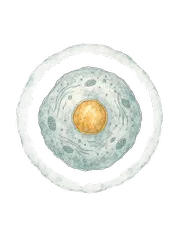
Mesenchymal stem cells are the architects of your body’s repair system. They can renew themselves, become a range of specialized cell types and, most importantly, act as “medical signaling cells,” guiding your body’s own repair mechanisms to where healing is needed.

Wharton’s Jelly is the gelatinous connective tissue inside a donated, healthy umbilical cord. It’s one of the richest known sources of Mesenchymal Stem Cells, collected non-invasively, after birth, from consenting, healthy, extensively screened donors.

At Regeneration Clinic Panama, Mesenchymal Stem Cells are used to support tissue repair and reduce inflammation across a range of degenerative, autoimmune, and neurological conditions.
Why Mesenchymal Stem Cells Over Other Stem Cell Sources?
Why Mesenchymal Stem Cells
Embryonic stem cells raise ethical concerns, because deriving them destroys a human embryo. Induced pluripotent stem cells (iPSCs) carry a documented risk of tumor formation and uncontrolled differentiation. Mesenchymal stem cells have low tumorigenicity and are immune-privileged, so they can be given from a donor with a strong safety record. That is why they have been through far more human clinical trials than iPSCs to date.

Why Wharton’s Jelly
Bone marrow and adipose Mesenchymal Stem Cells both require invasive collection from an adult donor: bone marrow aspiration or liposuction. Wharton’s Jelly Mesenchymal Stem Cells are collected non-invasively from donated umbilical cord tissue after birth. Research also shows they proliferate faster, resist cellular aging better than bone marrow Mesenchymal Stem Cells through repeated cell divisions, and show a higher capacity to generate neural progenitor cells, relevant to neurological applications.
100% Xeno-free Umbilical Cord-derived Mesenchymal Stem Cells
Read more about Xeno-Free| Aspect | Animal Serum | Human Platelet Lysate |
|---|---|---|
| Origin | Animal (bovine)-derived | Human (platelet)-derived |
| Xenogenic risk | Bovine proteins and xenogenic components | Completely xeno-free |
| Safety | Higher risk of immune reactions and allergies | No animal components, so a lower risk of reactions to them |
| Consistency | Variable lot-to-lot consistency | High quality & traceable human source |
| Cell quality | Slower proliferation, more senescence | Faster growth, less senescence, better long-term quality |
| Safety profile | Risk of virus, prions and unknown factors | Reduced risk, controlled human source |
| Clinical suitability | Less suited to advanced cell therapies | Well suited to advanced cell therapies |

Six steps from donation to therapy
Donation & collection
Umbilical cords are ethically sourced and donated with informed consent, so consent and sourcing are the foundation of everything that follows.
Isolation
Tissue is digested with Xeno-Free Collagenase, an enzyme free of animal-derived components, to release the Mesenchymal Stem Cells from the surrounding tissue.
Primary culture
Released cells are seeded in Xeno-Free Medium supplemented with PLTGold® (HPL), so they can attach and begin to multiply without animal-derived serum.
Expansion
Cells are expanded to the numbers needed for treatment while maintaining their quality and potency, so growth never comes at the cost of performance.
Quality control
Before use, cells are tested for identity, purity, viability and sterility, and results go into a certificate of analysis you can review.
Ready for therapy
The result is high-quality Mesenchymal Stem Cells that have passed our quality checks and are ready for clinical application.
In-House Laboratory
More about Laboratory20+ full-time scientists focused on cell processing, quality, research, and innovation.
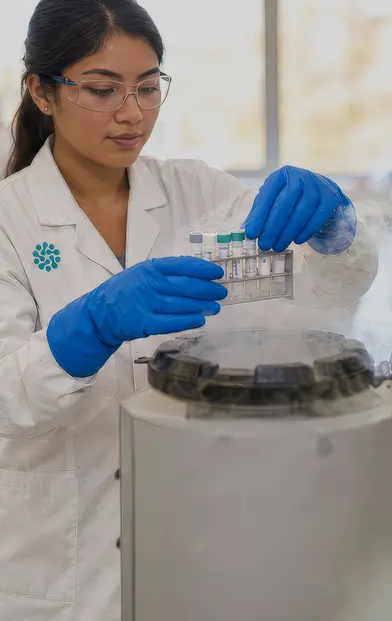
Our Own In-House Lab
Every cell used in your treatment is sourced, processed and tested in our own laboratory in Panama City by a dedicated team of scientists. From donation to treatment, every step runs under one quality system with full traceability.
Our cells are ALTA CELLS™, umbilical cord mesenchymal stem cells derived from Wharton’s Jelly in ethically donated, healthy umbilical cords and cultured without any animal-derived components.

Certificate of Analysis
Every patient receives a full Certificate of Analysis with their treatment: a detailed report showing the potency and viability of the exact cells used in their protocol. These are real, measured numbers from your own batch, tested in our laboratory and specific to you.
It is the same standard of transparency we would want as patients ourselves. You can see exactly what you are receiving, before you receive it.

Personalized Testing
Before treatment, we run specialized tests, including biomarkers, body composition and biological age markers. Gut health (GI-MAP) and EEG testing are available as add-ons. These results help our physicians understand how your body is likely to respond and shape your protocol around it.
Follow-up at 1, 3, 6, 9 and 12 months measures what changed, so we can adjust the next steps. It is one of the clearest ways we tailor care to each patient.
Regenerative Mapping System
Our Approach
A structured approach to understanding the patient, identifying biological and clinical priorities, and building a personalized regenerative strategy.
The diagnosis establishes the medical condition.
The Regenerative Mapping System helps our physicians understand how that condition is presenting in the individual patient.
It brings together clinical findings, functional status, laboratory results, genetics, epigenetics, biological signals, and disease specific information to identify what deserves attention.
The result is a personalized Regenerative Roadmap.
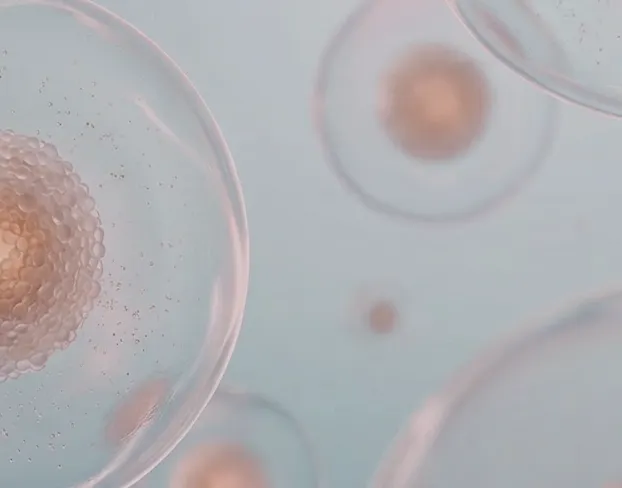
We Map Your
- Genetics
- Laboratory Results
- Condition
- Epigenetics
- Metabolic and Inflammatory Health
- Functional Status
- Relevant Hallmarks of Aging

How the Science Got Here


What the Research Shows, by Condition
Other ConditionsNeurological
A randomized, double-blind, sham-controlled trial of umbilical cord tissue-derived Mesenchymal Stem Cells in children with cerebral palsy found measurable improvement in clinical and imaging outcomes compared to the control group.
A meta-analysis of 9 randomized controlled trials in acute ischemic stroke (316 patients total) found mesenchymal stem cell therapy produced a significant reduction in NIHSS stroke severity scores compared to placebo, with no significant increase in adverse events.
Orthopedic & Joint
A systematic review of Wharton’s Jelly-derived mesenchymal stem cell treatment for knee osteoarthritis (6 studies, 97 patients, 134 knees, 3 to 48 months follow-up) found no serious adverse effects and significant improvement in pain and function scores (VAS, WOMAC, KOOS, IKDC).
In one 16-patient study followed for 48 months, patients showed sustained pain and function improvement at both 12 and 48 months, with statistically significant improvement on MRI in cartilage loss and osteophytes at 12 months.
Autoimmune
A multicenter trial of umbilical cord mesenchymal stem cell transplantation in 40 patients with active, treatment-refractory systemic lupus erythematosus found no transplant-related adverse events, with 32.5% of patients achieving a major clinical response and 27.5% a partial response over 12 months.
A Phase Ia trial of umbilical cord blood-derived Mesenchymal Stem Cells in rheumatoid arthritis patients found no serious short-term safety signals and a reduction in the standard disease activity score (DAS28) after a single infusion.
Autism Spectrum Disorder
A randomized controlled trial of bone marrow mesenchymal stem cells in 32 children with autism spectrum disorder (ages 5 to 15) found the treatment safe and feasible. Over 12 months, the main autism scales (CARS, GARS-II) showed no significant difference from standard care, while one measure of overall severity improved more in the mesenchymal stem cell group.
A separate trial combining umbilical cord mesenchymal stem cells with cord blood cells reported significant improvement on the CARS, Aberrant Behavior Checklist and Clinical Global Impression scales.




Why Regeneration Clinic’s Cells Specifically
Our cells are ALTA CELLS™: Wharton’s Jelly-derived Mesenchymal Stem Cells sourced from ethically donated, healthy umbilical cords. Every donor completes an extensive questionnaire and is screened for HIV, Hepatitis B, Hepatitis C, and other infectious diseases before anything reaches our lab.
Every batch is processed in our own in-house lab and undergoes sterility, microbial, and endotoxin testing before it’s ever used in a treatment. Every patient receives a Certificate of Analysis showing the exact potency and viability of the cells used in their protocol.
Mesenchymal Stem Cells are recognized for medical use in the European Union and Australia, with hundreds of clinical trials underway worldwide. In December 2024, the FDA approved the first mesenchymal stem cell product in the United States, for steroid-refractory acute graft-versus-host disease in children. For other conditions, mesenchymal stem cell therapy is not FDA-approved in the US.

Frequently asked questions
Read Full FAQAnswers about safety, cost and what to expect.
Our proprietary stem cell standard, refined over 10 years of research and treatment. Sourced from Wharton’s Jelly and produced entirely in-house.
The most common side effect is temporary pain at the injection site. Headache, nausea or fatigue happen rarely and usually resolve within 24 hours. No long-term side effects have been documented to date.
In the US, FDA approval follows a long, costly path for each specific product and condition, and for most conditions mesenchymal stem cell therapy hasn’t completed that path yet. Research continues worldwide, with hundreds of clinical trials underway. Patients travel to Panama for access they can’t get at home, delivered with in-house production, image-guided precision and a team that tells them honestly what to expect.
We treat neurological, autoimmune, orthopedic and sports, cardiovascular and fertility conditions, autism, and support healthy aging. Our medical team reviews every case individually before recommending a protocol.
Yes. Treatment takes place at our clinic in Panama City. Your consultation and case review happen remotely before you book any travel.
Protocols start at $10,000 USD, and your exact cost depends on your protocol. Treatment is not covered by insurance.

Still have a question?
Ask us directly. A patient advocate will reply personally.
Dive into our world

- Orthopedic & Sports
- 2 min
Sports Injuries: Where to Begin
Article overview
Strains, sprains and tendon problems can stall training for weeks. Here is how regenerative medicine fits into sports injury care, and why a personal evaluation comes first.
10/08/2026

- Orthopedic & Sports
- 2 min
Chronic Pain Starts With the Cause
Article overview
Long-lasting pain affects walking, work and sleep. Before weighing any treatment, it helps to understand where the pain comes from and what regenerative research is looking at.
10/08/2026

- Orthopedic & Sports
- 2 min
Recovery Goals After an Injury
Article overview
A sports injury can happen on the field, at the gym or on a morning walk. This piece looks at the tissues involved and at what a full recovery means for active people.
10/06/2026

- Orthopedic & Sports
- 2 min
Back, Knee and Hip Pain Research
Article overview
Persistent pain often traces back to arthritis, old injuries or worn joints. Here is what researchers are studying about mesenchymal stem cells and why the cause of pain shapes every plan.
10/06/2026