
Stem Cell Research
Library
Peer-reviewed studies on mesenchymal stem cells, organized by condition and summarized in plain language. Every study links to the original paper, so you can read the evidence yourself.
75,000+
Published papers on mesenchymal stem cells
13,000+
Registered mesenchymal stem cell trials
7
Condition categories
Reading the evidence
Studies differ in size and design, and design shapes how much a result can tell you. Each study in this library is tagged with its type.





Meta-analysis
Combines the results of several trials. The strongest overview when the trials behind it are well run.
How we choose studies
Every study in this library meets five standards.
Published in peer-reviewed journals and listed on PubMed.
Every study is checked for retractions before it appears here.
Cell source stated in every summary: umbilical cord and Wharton’s Jelly first, with bone marrow or fat-derived cells labeled.
Results reported as the authors found them, including mixed and negative findings.
Independent research teams only, kept separate from our own patient stories.



Studies library by condition
All ConditionsStudies from independent research teams, grouped by condition and summarized in plain language.
- ALS / Lou Gehrig’s
Randomized trial
A randomized, placebo-controlled phase 3 trial tested the person’s own bone marrow mesenchymal stem cells, modified to release nerve growth factors, in people with ALS.
The treatment was well tolerated and did not meet its main goal of slowing decline overall; a subgroup with milder disease showed a possible benefit, and markers of nerve inflammation in the spinal fluid improved.
Cudkowicz et al., Muscle & Nerve, 2022
Read on PubMed - ALS / Lou Gehrig’s
Meta-analysis
A meta-analysis pooled 11 early-phase studies with 220 people with ALS who received stem cells, 152 of them mesenchymal stem cells. Mesenchymal stem cells given into the spinal fluid appeared to slow functional decline for a limited time, while breathing capacity continued to decline in every group.
Morata-Tarifa et al., NPJ Regenerative Medicine, 2021
Read on PubMed - ALS / Lou Gehrig’s
Open-label study
A case-control study compared 67 people with ALS who received Wharton’s Jelly mesenchymal stem cells into the spinal fluid with 67 matched people from an international ALS research database.
About a third progressed more slowly after treatment, half were unchanged and a fifth progressed faster, with no serious adverse reactions; the study was not randomized, and the authors work for the center that provides the therapy.
Barczewska et al., Stem Cell Reviews and Reports, 2020
Read on PubMed - Alzheimer’s Disease
Open-label study
A 2026 review of 17 registered mesenchymal stem cell trials in Alzheimer’s found that the five with reported results all described acceptable safety.
Two trials of one bone marrow mesenchymal stem cell product reported benefits, while trials of umbilical cord blood and fat-derived mesenchymal stem cells showed no statistically significant benefit.
Kim et al., Tissue Engineering and Regenerative Medicine, 2026
Read on PubMed - Alzheimer’s Disease
Randomized trial
A randomized, double-blind, placebo-controlled phase 2a trial at ten US centers gave 49 people with mild Alzheimer’s IV infusions of donor bone marrow-derived mesenchymal stem cells (laromestrocel) or placebo.
The infusions were well tolerated with no amyloid-related brain swelling or bleeding (ARIA), and at 39 weeks the treated groups showed slower brain shrinkage and better scores on some memory and daily-living measures; the study was small and run by the product’s developer.
Rash et al., Nature Medicine, 2025
Read on PubMed - Alzheimer’s Disease
Phase 1 or 2
A phase 1 trial gave nine people with mild to moderate Alzheimer’s three injections of umbilical cord blood-derived mesenchymal stem cells into the fluid spaces of the brain.
Fever, headache and nausea were common and passed within 36 hours, two participants needed an extra day in hospital, and there was no dose-limiting toxicity; the trial was designed to test safety.
Kim et al., Alzheimer’s Research & Therapy, 2021
Read on PubMed - Parkinson’s Disease
Randomized trial
A randomized, double-blind trial gave 24 people with Parkinson’s six IV infusions of their own fat-derived mesenchymal stem cells or placebo over 32 weeks.
The infusions were well tolerated, and the study found no clear difference from placebo on daily-living scores at 52 weeks.
Vij et al., Parkinson’s Disease, 2026
Read on PubMed - Parkinson’s Disease
Randomized trial
A randomized, placebo-controlled phase 2 trial in 45 people with mild to moderate Parkinson’s compared three IV infusions of donor bone marrow mesenchymal stem cells, two infusions or placebo, with 88 weeks of follow-up.
The three-infusion group improved more on movement scores than placebo, the two-infusion group improved less than placebo, and side effects were mild and short-lived.
Schiess et al., Movement Disorders, 2025
Read on PubMed - Parkinson’s Disease
Phase 1 or 2
An open-label phase 1 study gave 20 people with mild to moderate Parkinson’s a single IV infusion of donor bone marrow-derived mesenchymal stem cells at four dose levels.
There were no serious infusion reactions, and at the highest dose, blood markers of inflammation fell and movement scores improved over 52 weeks; the study had no placebo group.
Schiess et al., Movement Disorders, 2021
Read on PubMed
Regulation today
Mesenchymal stem cells are recognized for medical use in the European Union and Australia, with hundreds of clinical trials underway worldwide.
In December 2024, the FDA approved the first mesenchymal stem cell product in the United States, for steroid-refractory acute graft-versus-host disease in children. For other conditions, mesenchymal stem cell therapy is not FDA-approved in the US.
Our Laboratory
Learn about The Science
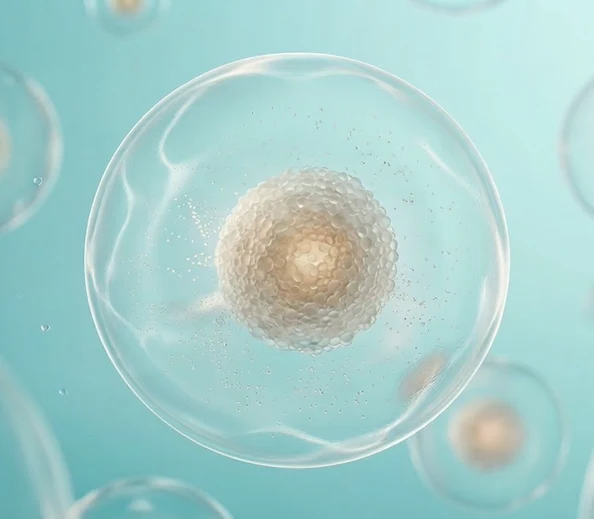
ALTA CELLS™, our Wharton’s Jelly mesenchymal stem cells, are isolated, expanded and tested here, batch by batch.

Every batch is tested for identity, purity, viability and sterility before release.

Our R&D team, led by Dr. Deivis Beltrán, works on new cell-based therapies.
Frequently asked questions
Read Full FAQAnswers about safety, cost and what to expect.
Our proprietary stem cell standard, refined over 10 years of research and treatment. Sourced from Wharton’s Jelly and produced entirely in-house.
The most common side effect is temporary pain at the injection site. Headache, nausea or fatigue happen rarely and usually resolve within 24 hours. No long-term side effects have been documented to date.
In the US, FDA approval follows a long, costly path for each specific product and condition, and for most conditions mesenchymal stem cell therapy hasn’t completed that path yet. Research continues worldwide, with hundreds of clinical trials underway. Patients travel to Panama for access they can’t get at home, delivered with in-house production, image-guided precision and a team that tells them honestly what to expect.
We treat neurological, autoimmune, orthopedic and sports, cardiovascular and fertility conditions, autism, and support healthy aging. Our medical team reviews every case individually before recommending a protocol.
Yes. Treatment takes place at our clinic in Panama City. Your consultation and case review happen remotely before you book any travel.
Protocols start at $10,000 USD, and your exact cost depends on your protocol. Treatment is not covered by insurance.

Still have a question?
Ask us directly. A patient advocate will reply personally.