

Hair restoration and stem cell therapy
Thinning hair can chip away at confidence, and the usual treatments ask for daily effort with slow, uneven results. We look at what drives your hair loss and how regenerative care may support the scalp.

Medically reviewed by:Javier E. Garrido L.MD, MSc
On this page
Why hair thins
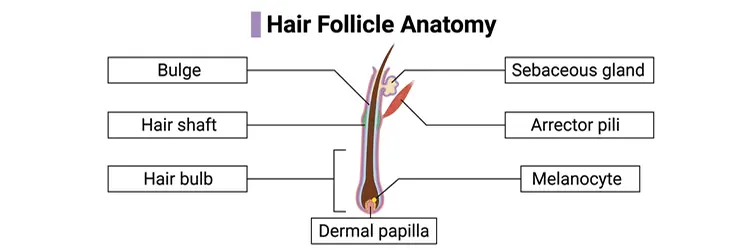
Androgenetic alopecia, also called male or female pattern hair loss, is the most common cause of thinning hair in adults. It runs in families and is linked to how hair follicles respond to androgens, hormones present in both men and women. Over time, affected follicles shrink and produce finer, shorter hairs until some stop producing visible hair. In men it often starts at the temples and crown. In women it usually shows as a widening part and thinning over the top of the head. Thyroid problems, low iron, stress and some medicines can also cause hair loss, so an accurate diagnosis comes first.
At Regeneration Clinic Panama, we take an individualized approach to your care. Our medical team will review your condition, medical history, and individual needs to help you understand your treatment options.
Book a ConsultationCommon signs and symptoms
Sudden, patchy or rapid hair loss has other causes, so see a physician or dermatologist for a proper evaluation.
- Gradual thinning on the top of the head
- A receding hairline at the temples
- Thinning at the crown
- A widening part
- Finer, shorter hairs where hair used to be thick
- More scalp visible in bright light
- More hair in the brush or shower drain
How hair loss is usually treated
Dermatologists usually start with the treatments that have the strongest evidence: topical minoxidil for men and women, and finasteride tablets for men. Other options include oral minoxidil prescribed off-label, spironolactone for some women, low-level laser devices, platelet-rich plasma injections and hair transplant surgery. These treatments help many people keep or regrow hair, and they work best when started early and continued long term. Results take months, and stopping treatment often means losing the gains. Some people cannot tolerate the side effects, so many keep looking for additional options.
How stem cell therapy works for hair
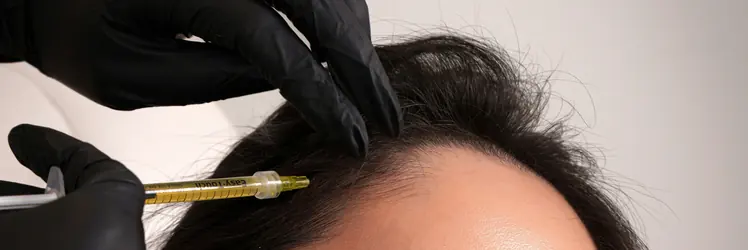
Mesenchymal stem cells release growth factors and signaling molecules that calm inflammation and support blood supply to tissue. In laboratory studies, these factors support the dermal papilla cells that control the hair growth cycle. Most human research so far has used products made from these cells, such as conditioned media and extracts, applied to or injected into the scalp. We use mesenchymal stem cells from the Wharton’s Jelly of donated umbilical cords as part of a personalized plan, delivered by IV and, in selected cases, by other routes your physician recommends.
Every patient with hair loss has a different history and set of needs, so we start with a full evaluation. Your physician reviews your history, symptoms, previous treatments and test results before deciding whether a regenerative protocol is appropriate. When it is, cell therapy becomes one part of a personalized care plan.
Important: cellular therapy is an evolving area of medicine. Outcomes vary, and treatment decisions are made individually after a medical assessment.
What the research says
These studies were published by independent research teams. Their results are separate from our own patient outcomes.
- Source link
In a randomized, double-blind, placebo-controlled trial of 38 adults with pattern hair loss, a topical extract made from adipose (fat)-derived stem cells increased hair count by 28.1% at 16 weeks, compared with 7.1% for the placebo solution.
Hair thickness also improved, and no serious side effects were reported.
- Source link
In a randomized, double-blind split-scalp trial of 37 men using minoxidil, one side of the scalp received injections of conditioned media from adipose-derived stem cells and the other side saline.
Hair count and density improved on both sides after 6 weeks, with no significant difference between them, so any added benefit remains unclear.
- Source link
A systematic review of 20 clinical studies with 724 patients found that regenerative approaches, including stem cell conditioned media, extracellular vesicles and stem cell therapies, were linked to gains in hair density and thickness with only mild, short-lived side effects.
The authors note that studies were small and varied and call for larger randomized trials.
Research is early: most studies are small, used fat-derived cells or cell-derived products on the scalp, and no large trial has tested umbilical cord mesenchymal stem cells for pattern hair loss.
Who may consider this
A personalized evaluation may be right for you if you:
- Have pattern hair loss confirmed by a physician or dermatologist
- Have ruled out thyroid, iron and other medical causes of hair loss
- Have tried or discussed standard treatments such as minoxidil
- Want regenerative support alongside the care that already helps you
- Understand that results vary and no outcome is promised
Our medical team decides suitability after reviewing each case.
What to expect
Before Treatment
Our team reviews your medical history and diagnostic information. We may recommend extra tests to understand your current health and whether you may be a candidate.
During Your Stay
If you are eligible, our medical team guides you through each stage of treatment and provides clinical support throughout.
After Treatment
We follow up at 1, 3, 6, 9 and 12 months after treatment and adjust your plan as needed.

Schedule a personalized consultation to discuss your medical history, treatment goals, and potential care options.
Book a ConsultationRelated articles

- Orthopedic & Sports
- 2 min
Sports Injuries: Where to Begin
Article overview
Strains, sprains and tendon problems can stall training for weeks. Here is how regenerative medicine fits into sports injury care, and why a personal evaluation comes first.
10/08/2026

- Orthopedic & Sports
- 2 min
Chronic Pain Starts With the Cause
Article overview
Long-lasting pain affects walking, work and sleep. Before weighing any treatment, it helps to understand where the pain comes from and what regenerative research is looking at.
10/08/2026

- Orthopedic & Sports
- 2 min
Recovery Goals After an Injury
Article overview
A sports injury can happen on the field, at the gym or on a morning walk. This piece looks at the tissues involved and at what a full recovery means for active people.
10/06/2026
Real Patients. Real Results.
Patient stories share individual experiences. Results vary, and no outcome is promised.



- Takes less than 2 minutes
- No commitment
- Takes less than 2 minutes
- No commitment
Your questions
Read Full FAQAnswers about safety, cost and what to expect.
Talk to your dermatologist before stopping any hair loss treatment, because gains are often lost when treatment stops. Our physicians plan regenerative care to work alongside the treatments that already help you.
Hair grows in slow cycles, so any change takes months to judge. Studies of stem cell derived products measured hair counts over several weeks to months. Results vary from person to person, and no outcome is promised.
Female pattern hair loss is common and often responds to standard care. Most stem cell studies so far enrolled mainly men, so our physicians review your history, lab results and goals before recommending anything.
Mesenchymal stem cells are recognized for medical use in the European Union and Australia, with hundreds of clinical trials underway worldwide. In December 2024, the FDA approved the first mesenchymal stem cell product in the United States, for steroid-refractory acute graft-versus-host disease in children. For other conditions, mesenchymal stem cell therapy is not FDA-approved in the US.
Protocols start at $10,000 USD, and your exact cost depends on your protocol. Treatment is not covered by insurance. Results vary from patient to patient and no outcome is promised.

Still have a question?
Ask us directly. A patient advocate will reply personally.