
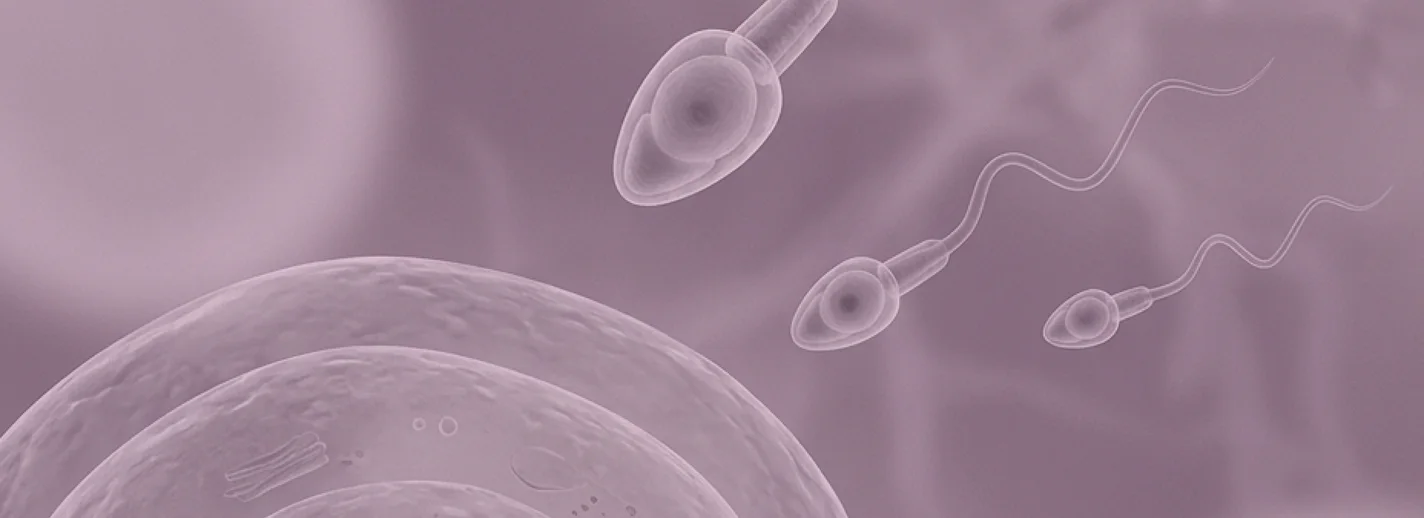
Fertility and stem cell therapy
Trying to grow your family can bring months of waiting, testing and disappointment, for women and for men. We look at the factors behind fertility and how regenerative care may support your efforts.

Medically reviewed by:Javier E. Garrido L.MD, MSc
On this page
Fertility challenges
Fertility is the ability to conceive and carry a pregnancy, and it depends on both partners. Infertility is usually diagnosed after 12 months of trying without a pregnancy, or after 6 months for women 35 and older. In women, common factors include diminished ovarian reserve, premature ovarian insufficiency, where the ovaries stop working normally before age 40, ovulation problems and a thin or scarred uterine lining. In men, factors include low sperm count or quality and, in some cases, no sperm in the semen. Age affects fertility for both partners, and many couples have several factors at once.

At Regeneration Clinic Panama, we take an individualized approach to your care. Our medical team will review your condition, medical history, and individual needs to help you understand your treatment options.
Book a ConsultationCommon signs and symptoms
Many fertility factors cause no symptoms at all, so testing both partners with a fertility specialist is the clearest way to understand what is happening.
- No pregnancy after 12 months of trying, or 6 months if 35 or older
- Irregular, very light or missing periods
- Hot flashes or night sweats before age 40
- Low AMH or few follicles on ultrasound
- A thin uterine lining on ultrasound
- Several IVF cycles without a pregnancy
- Low sperm count or poor sperm movement on semen analysis
- Repeated pregnancy loss
How fertility is usually supported
Fertility specialists start by testing both partners, then tailor care to the cause. Options include medicines that support ovulation, intrauterine insemination (IUI), in vitro fertilization (IVF), surgery for problems such as uterine scarring or varicocele, and hormone therapy. For premature ovarian insufficiency or very low ovarian reserve, physicians often discuss donor eggs, and for some men, sperm retrieval procedures are an option. These treatments help many families, though they can be demanding, and some people keep looking for additional ways to support their fertility efforts.

How stem cell therapy works for fertility
Mesenchymal stem cells release growth factors that support blood flow, calm inflammation and help damaged tissue repair itself. In early clinical studies, umbilical cord mesenchymal stem cells placed in the uterus were linked to a thicker uterine lining in women with scarring, and bone marrow mesenchymal stem cells placed in the testes were linked to better hormone levels in men with no sperm in the semen. We use mesenchymal stem cells from the Wharton’s Jelly of donated umbilical cords as part of a personalized plan, coordinated with your fertility specialist.
Every person and every couple has a different history and set of needs, so we start with a full evaluation. Your physician reviews your history, symptoms, previous treatments and test results before deciding whether a regenerative protocol is appropriate. When it is, cell therapy becomes one part of a personalized care plan.
Important: cellular therapy is an evolving area of medicine. Outcomes vary, and treatment decisions are made individually after a medical assessment.
What the research says
These studies were published by independent research teams. Their results are separate from our own patient outcomes.
- Source link
In a phase 1 study without a control group, 26 women with infertility caused by repeated uterine scarring received umbilical cord mesenchymal stem cells on a collagen scaffold after surgery to remove the scarring.
Three months later the uterine lining was thicker on average, and over 30 months of follow-up 10 women became pregnant, with no treatment-related serious side effects.
- Source link
In a double-blind randomized trial of 25 women with a thin uterine lining caused by scarring, live births occurred in 3 of 11 women who received umbilical cord mesenchymal stem cells on a collagen scaffold and in 1 of 13 women in the control group.
The trend favored the mesenchymal stem cell group, but the difference was not statistically significant in this small trial.
- Source link
In a non-randomized, open-label phase 1 trial of 80 men with no sperm in the semen (non-obstructive azoospermia), 40 received their own bone marrow-derived mesenchymal stem cells into the testes and 40 received hormone therapy.
After 6 months the authors reported better hormone levels and sperm concentration in the mesenchymal stem cell group with no complications; without randomization these results are preliminary.
Research is early: studies are small, most placed mesenchymal stem cells directly in the uterus, ovaries or testes, and no study can promise a pregnancy.
Who may consider this
A personalized evaluation may be right for you if you:
- Are trying to conceive and want to support your fertility efforts
- Have a diagnosis such as low ovarian reserve, premature ovarian insufficiency, a thin uterine lining or low sperm production
- Have completed fertility testing for both partners, or plan to
- Want to coordinate regenerative care with your fertility specialist or IVF clinic
- Understand that results vary and no outcome, including pregnancy, is promised
Our medical team decides suitability after reviewing each case.
What to expect
Before Treatment
Our team reviews your medical history and diagnostic information. We may recommend extra tests to understand your current health and whether you may be a candidate.
During Your Stay
If you are eligible, our medical team guides you through each stage of treatment and provides clinical support throughout.
After Treatment
We follow up at 1, 3, 6, 9 and 12 months after treatment and adjust your plan as needed.

Schedule a personalized consultation to discuss your medical history, treatment goals, and potential care options.
Book a ConsultationRelated articles

- Orthopedic & Sports
- 2 min
Sports Injuries: Where to Begin
Article overview
Strains, sprains and tendon problems can stall training for weeks. Here is how regenerative medicine fits into sports injury care, and why a personal evaluation comes first.
10/08/2026

- Orthopedic & Sports
- 2 min
Chronic Pain Starts With the Cause
Article overview
Long-lasting pain affects walking, work and sleep. Before weighing any treatment, it helps to understand where the pain comes from and what regenerative research is looking at.
10/08/2026

- Orthopedic & Sports
- 2 min
Recovery Goals After an Injury
Article overview
A sports injury can happen on the field, at the gym or on a morning walk. This piece looks at the tissues involved and at what a full recovery means for active people.
10/06/2026
Real Patients. Real Results.
Patient stories share individual experiences. Results vary, and no outcome is promised.



- Takes less than 2 minutes
- No commitment
- Takes less than 2 minutes
- No commitment
Your questions
Read Full FAQAnswers about safety, cost and what to expect.
Our goal is to support the health of the tissues involved in fertility. Early studies are encouraging, and pregnancy depends on many factors. Results vary, and no outcome, including pregnancy, is promised.
Yes. Male factors play a role for many couples. Early studies have looked at mesenchymal stem cells for men with very low or no sperm production, and our physicians can evaluate both partners.
Yes. We plan regenerative care to work alongside your fertility specialist. Share your treatment calendar with our physicians so timing can be coordinated with your cycles and procedures.
Recent results help our physicians understand what may be affecting fertility. If you have not been tested yet, we can tell you which tests to bring, such as AMH, a pelvic ultrasound and a semen analysis.
Mesenchymal stem cells are recognized for medical use in the European Union and Australia, with hundreds of clinical trials underway worldwide. In December 2024, the FDA approved the first mesenchymal stem cell product in the United States, for steroid-refractory acute graft-versus-host disease in children. For other conditions, mesenchymal stem cell therapy is not FDA-approved in the US.
Protocols start at $10,000 USD, and your exact cost depends on your protocol. Treatment is not covered by insurance. Results vary from patient to patient and no outcome is promised.

Still have a question?
Ask us directly. A patient advocate will reply personally.