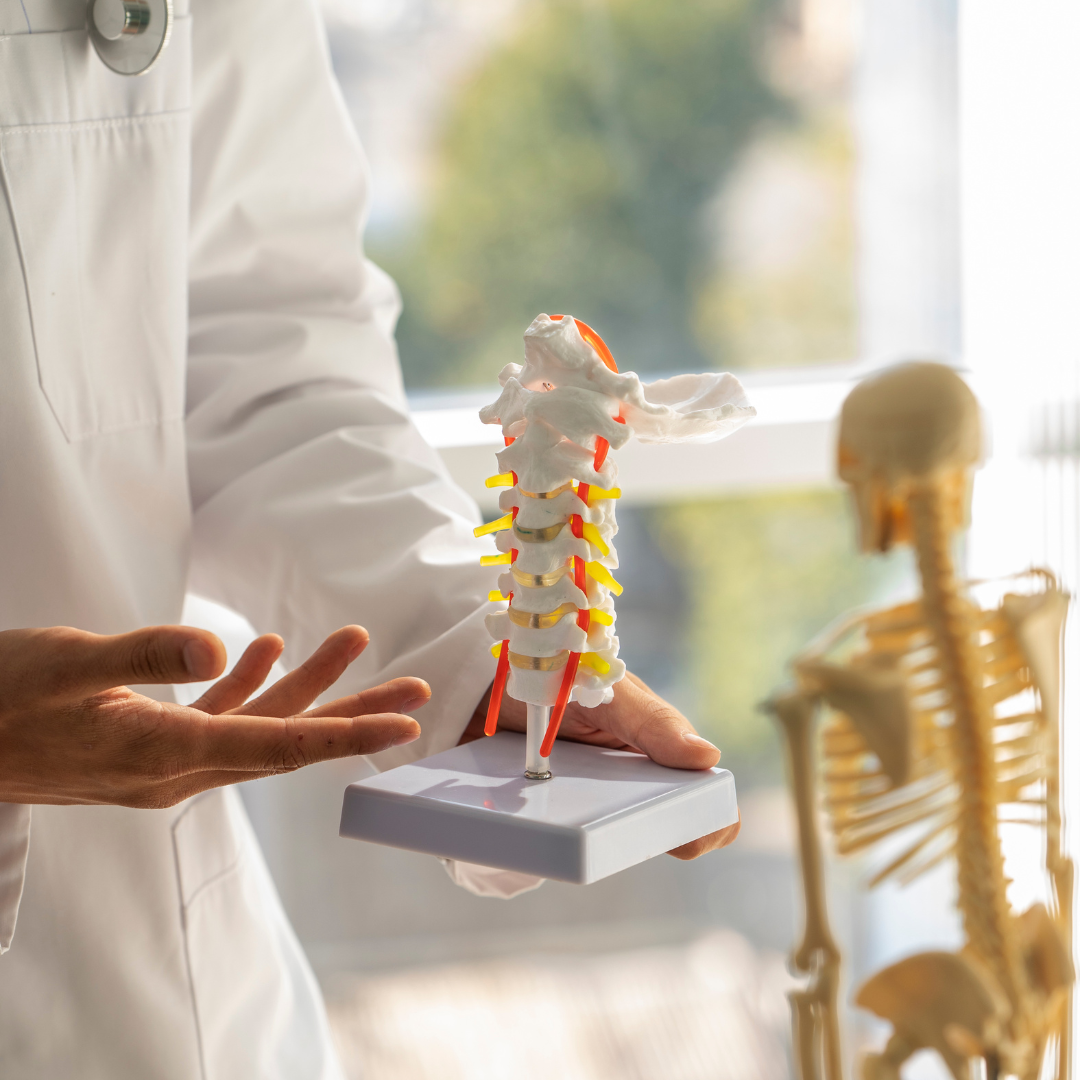
Nuestro único Acercarse a la lesión de la médula espinal
La lesión medular traumática es una afección neurológica que altera la vida y tiene importantes implicaciones socioeconómicas para los pacientes y sus cuidadores. Si bien el tratamiento médico ha avanzado considerablemente, se ha logrado un progreso limitado en el desarrollo de tratamientos eficaces para mejorar los resultados neurológicos.
Comprender las lesiones de la médula espinal
La lesión medular traumática (LMT) es una afección neurológica que altera la vida y tiene importantes implicaciones socioeconómicas para los pacientes y sus cuidadores. Si bien el manejo médico de la LMT ha experimentado avances considerables en cuanto al diagnóstico, la estabilización, las tasas de supervivencia y el bienestar general de los pacientes, el progreso en el desarrollo de opciones de tratamiento eficaces para mejorar los resultados neurológicos ha sido limitado.
La fase de lesión secundaria
La fase de lesión secundaria en la fisiopatología de la lesión medular es una etapa crítica caracterizada por cascadas destructivas e incontroladas que involucran señalización molecular, inflamación, cambios vasculares y disfunciones celulares secundarias. Abordar esta lesión secundaria es crucial para posibles intervenciones terapéuticas.
Los MSC como estrategia terapéutica
Una estrategia prometedora que ha sido ampliamente probada es el uso de células madre mesenquimales (CMM). Las CMM han captado la atención debido a su facilidad de aislamiento y conservación, así como a sus propiedades únicas entre otros tipos y fuentes de células madre, lo que las hace altamente accesibles para su aplicación clínica.
Por qué destacan las MSC
Las células madre mesenquimales (MSC) ofrecen una combinación única de propiedades antiinflamatorias, inmunomoduladoras y regenerativas que las hacen especialmente idóneas para abordar la compleja cascada de lesiones secundarias en la lesión medular. Su capacidad para modular el entorno de la lesión proporciona una vía significativa hacia una mejor recuperación neurológica y mejores resultados para el paciente.
References
Amyotrophic Lateral Sclerosis
References
Masrori, P., & Van Damme, P. (2020). Amyotrophic lateral sclerosis: a clinical review. European Journal of Neurology: The Official Journal of the European Federation of Neurological Societies, 27(10), 1918-1929. https://doi.org/10.1111/ene.14393
Sivandzade, F., & Cucullo, L. (2021). Regenerative stem cell therapy for neurodegenerative diseases: An overview. International Journal of Molecular Sciences, 22(4), 2153. https://doi.org/10.3390/ijms22042153
Shen, Z., Huang, W., Liu, J., Tian, J., Wang, S., & Rui, K. (2021c). Effects of mesenchymal stem Cell-Derived exosomes on autoimmune diseases. Frontiers in Immunology, 12. https://doi.org/10.3389/fimmu.2021.749192
Rheumatoid arthritis
References
Scherer, H., Häupl, T., & Burmester, G. R. (2020). The etiology of rheumatoid arthritis. Journal of Autoimmunity, 110, 102400. https://doi.org/10.1016/j.jaut.2019.102400
Sarsenova, M., Issabekova, A. S., Abisheva, S. D., Rutskaya-Moroshan, K., Ogay, V., & Saparov, A. (2021). Mesenchymal stem Cell-Based therapy for rheumatoid arthritis. International Journal of Molecular Sciences, 22(21), 11592. https://doi.org/10.3390/ijms222111592
Systemic Lupus Erythematosus
References
Fava, A., & Petri, M. (2019). Systemic lupus erythematosus: Diagnosis and clinical management. Journal of Autoimmunity, 96, 1–13. https://doi.org/10.1016/j.jaut.2018.11.001
Li, A., Guo, F., Pan, Q., Chen, S., Chen, J., & Liu, H. (2021). Mesenchymal stem cell therapy: hope for patients with systemic lupus erythematosus. Frontiers in Immunology, 12. https://doi.org/10.3389/fimmu.2021.728190
Multiple Sclerosis
References
Dobson, R., & Giovannoni, G. (2019). Multiple sclerosis – a review. European Journal of Neurology: The Official Journal of the European Federation of Neurological Societies, 26(1), 27–40. https://doi.org/10.1111/ene.13819
Jafarzadeh Bejargafshe, M., Hedayati, M., Zahabiasli, S., Tahmasbpour,E.,Rahmanzadeh,S., & Nejad-Moghaddam, A. (2019). Safety and efficacy of stem cell therapy for treatment of neural damage in patients with multiple sclerosis. Stem Cell Investigation, 6, 44. https://doi.org/10.21037/sci.2019.10.06
Masrori, P., & Van Damme, P. (2020). Amyotrophic lateral sclerosis: a clinical review. European Journal of Neurology, 27(10), 1918–1929. https://doi.org/10.1111/ene.14393
Sivandzade, F., & Cucullo, L. (2021). Regenerative stem cell therapy for Neurodegenerative Diseases: An Overview. International Journal of Molecular Sciences, 22(4), 2153. https://doi.org/10.3390/ijms22042153
IBD Inflammatory bowel disease
References
Inflammatory bowel disease (IBD). (2023b, April 17). Centers for Disease Control and Prevention. https://www.cdc.gov/ibd/
Ko, J. Z., Johnson, S., & Dave, M. (2021c). Efficacy and Safety of Mesenchymal Stem/Stromal cell therapy for inflammatory bowel Diseases: An Up-to-Date Systematic Review. Biomolecules, 11(1), 82. https://doi.org/10.3390/biom11010082
Systemic vasculitis
References
Shen, Z., Huang, W., Liu, J., Tian, J., Wang, S., & Rui, K. (2021e). Effects of mesenchymal stem Cell-Derived exosomes on autoimmune diseases. Frontiers in Immunology, 12. https://doi.org/10.3389/fimmu.2021.749192
Liu, Y., Yan, L. M., Wan, L., Xiang, T. X., Le, A., Liu, J. M., … & Zhang, W. (2020). Viral dynamics in mild and severe cases of COVID-19. Cell & Bioscience, 10(1), 1-7. https://www.nature.com/articles/s41419-020-2542-9
Angina/Coronary Heart Disease
References
National Center for Biotechnology Information. (2016). Drinking Water Arsenic and Cardiovascular Disease. Environmental Health Perspectives, 124(6), A106-A107. https://www.ncbi.nlm.nih.gov/pmc/articles/PMC4958723/
Yun, C. W., & Lee, S. Y. (2019). Enhancement of functionality and therapeutic efficacy of Cell-Based therapy using mesenchymal stem cells for cardiovascular disease. International Journal of Molecular Sciences, 20(4), 982. https://doi.org/10.3390/ijms20040982
Xiong, Y., Gong, Z., Tang, R., & Yang, Y. (2021). The pivotal roles of exosomes derived from endogenous immune cells and exogenous stem cells in myocardial repair after acute myocardial infarction. Theranostics, 11(3), 1046–1058. https://doi.org/10.7150/thno.53326
Cushing, K., & Higgins, P. D. R. (2021). Management of Crohn disease: A review: A review. JAMA: The Journal of the American Medical Association, 325(1), 69-80. https://doi.org/10.1001/jama.2020.18936
Wang, R., Yao, Q., Chen, W., Gao, F., Li, P., Wu, J., Yu, J., & Cao, H. (2021). Stem cell therapy for Crohn’s disease: systematic review and meta-analysis of preclinical and clinical studies. Stem Cell Research & Therapy, 12(1). https://doi.org/10.1186/s13287-021-02533-0
Ulcerative Colitis
References
Gajendran, M., Loganathan, P., Jimenez, G., Catinella, A. P., Ng, N., Umapathy, C., Ziade, N., & Hashash, J. G. (2019). A comprehensive review and update on ulcerative colitis. Disease-a-Month: DM, 65(12), 100851. https://doi.org/10.1016/j.disamonth.2019.02.004
Hosseini-Asl, S.-K., Mehrabani, D., & Karimi-Busheri, F. (2020). Therapeutic effect of mesenchymal stem cells in ulcerative colitis: A review on achievements and challenges. Journal of Clinical Medicine, 9(12), 3922. https://doi.org/10.3390/jcm9123922
Neurological conditions
References
Guy, R., & Offen, D. (2020). Promising opportunities for treating neurodegenerative diseases with mesenchymal stem cell-derived exosomes. Biomolecules, 10(9), 1320. https://doi.org/10.3390/biom10091320
Barthels, D., & Das, H. (2020). Current advances in ischemic stroke research and therapies. Biochimica et Biophysica Acta. Molecular Basis of Disease, 1866(4), 165260. https://doi.org/10.1016/j.bbadis.2018.09.012
Campbell, B. C. V., De Silva, D. A., Macleod, M. R., Coutts, S. B., Schwamm, L. H., Davis, S. M., & Donnan, G. A. (2019). Ischaemic stroke. Nature Reviews. Disease Primers, 5(1), 70. https://doi.org/10.1038/s41572-019-0118-8
Kawabori, M., Shichinohe, H., Kuroda, S., & Houkin, K. (2020). Clinical trials of stem cell therapy for cerebral ischemic stroke. International Journal of Molecular Sciences, 21(19), 7380. https://doi.org/10.3390/ijms21197380
Parkinson’s
References
Pradhan, A. U., Uwishema, O., Onyeaka, H., Adanur, I., & Dost, B. (2022). A review of stem cell therapy: An emerging treatment for dementia in Alzheimer’s and Parkinson’s disease. Brain and Behavior, 12(9). https://doi.org/10.1002/brb3.2740
Multiple system atrophy (MSA)
References
Goh YY, Saunders E, Pavey S, Rushton E, Quinn N, Houlden H, Chelban V. Multiple system atrophy. Pract Neurol. 2023 Jun;23(3):208-221. doi: 10.1136/pn-2020-002797. Epub 2023 Mar 16. PMID: 36927875.
Khellaf A, Khan DZ, Helmy A. Recent advances in traumatic brain injury. J Neurol. 2019 Nov;266(11):2878-2889. doi: 10.1007/s00415-019-09541-4. Epub 2019 Sep 28. PMID: 31563989; PMCID: PMC6803592.
Chronic traumatic encephalopathy
References
Pierre K, Molina V, Shukla S, Avila A, Fong N, Nguyen J, Lucke-Wold B. Chronic traumatic encephalopathy: Diagnostic updates and advances. AIMS Neurosci. 2022 Dec 19;9(4):519-535. doi: 10.3934/Neuroscience.2022030. PMID: 36660076; PMCID: PMC9826753.
Spinal cord injury
References
Alizadeh, A., Dyck, S. M., & Karimi-Abdolrezaee, S. (2019). Traumatic spinal cord injury: An overview of pathophysiology, models and acute injury mechanisms. Frontiers in neurology, 10. https://doi.org/10.3389/fneur.2019.00282
Cofano, F., Boido, M., Monticelli, M., Zenga, F., Ducati, A., Vercelli, A., & Garbossa, D. (2019). Mesenchymal stem cells for spinal cord injury: Current options, limitations, and future of cell therapy. International Journal of Molecular Sciences, 20(11), 2698. https://doi.org/10.3390/ijms20112698
Looi, Q. H., Eng, S. P., Liau, L. L., Tor, Y. S., Bajuri, M. Y., Ng, M. H., & Law, J. X. (2020). Mesenchymal stem cell therapy for sports injuries – from research to clinical practice. Sains malaysiana, 49(4), 825-838. https://doi.org/10.17576/jsm-2020-4904-12
Arthritis & Osteoarthritis
References
Jang, S., Lee, K., & Ju, J. H. (2021). Recent updates of diagnosis, pathophysiology, and treatment on osteoarthritis of the knee. International Journal of Molecular Sciences, 22(5). https://doi.org/10.3390/ijms22052619